Romani genocide
The Tattooist of AuschwitzThe Romani genocide, known in Romani as the Porajmos, is the systematic mass murder of the Roma and Sinti peoples by Nazi Germany and its allies during World War II. In The Tattooist of Auschwitz, this genocide is rendered through the intimate, devastating perspective of Lale Sokolov, the camp's Tätowierer, who lives among the Romany in Birkenau and witnesses the liquidation of the Gypsy camp in a single night. The event functions as a turning point in the narrative, severing Lale's fragile sense of belonging, forcing him to confront the scale of Nazi murder, and deepening his vow to survive and bear witness.
The Romany Community and Lale's Place Within It
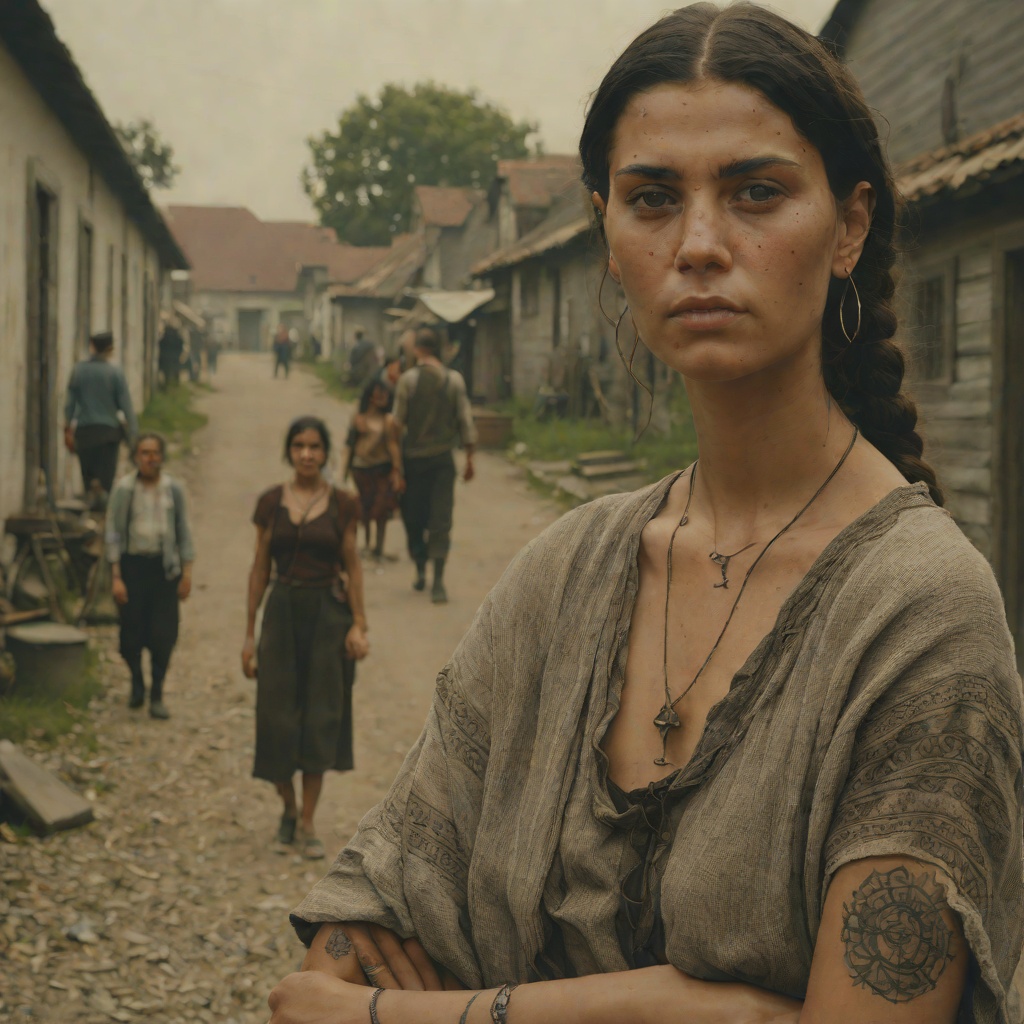
Before the liquidation, Lale had found an unexpected refuge among the Romany. Living in their block gave him a sense of security and belonging that was relative to the conditions of the majority of prisoners. He settled into a pattern of life that was comfortable compared to the plight of the thousands of starving men who had to work, fight, and live together. He worked when he had to, spent whatever time he could steal with Gita, played with the Romany children, and talked to their parents—mostly the younger men, but also the older women. He loved how they cared for everyone, not only their biological family. He did not connect so well with the older men, who mostly sat around not engaging with the children, the young adults, or even the older women. When he looked at them, he often thought about his own father. This community, with its collective care and its children's laughter, had become a human counterpoint to the dehumanizing machinery of the camp, making its destruction all the more brutal.
The Night of the Liquidation
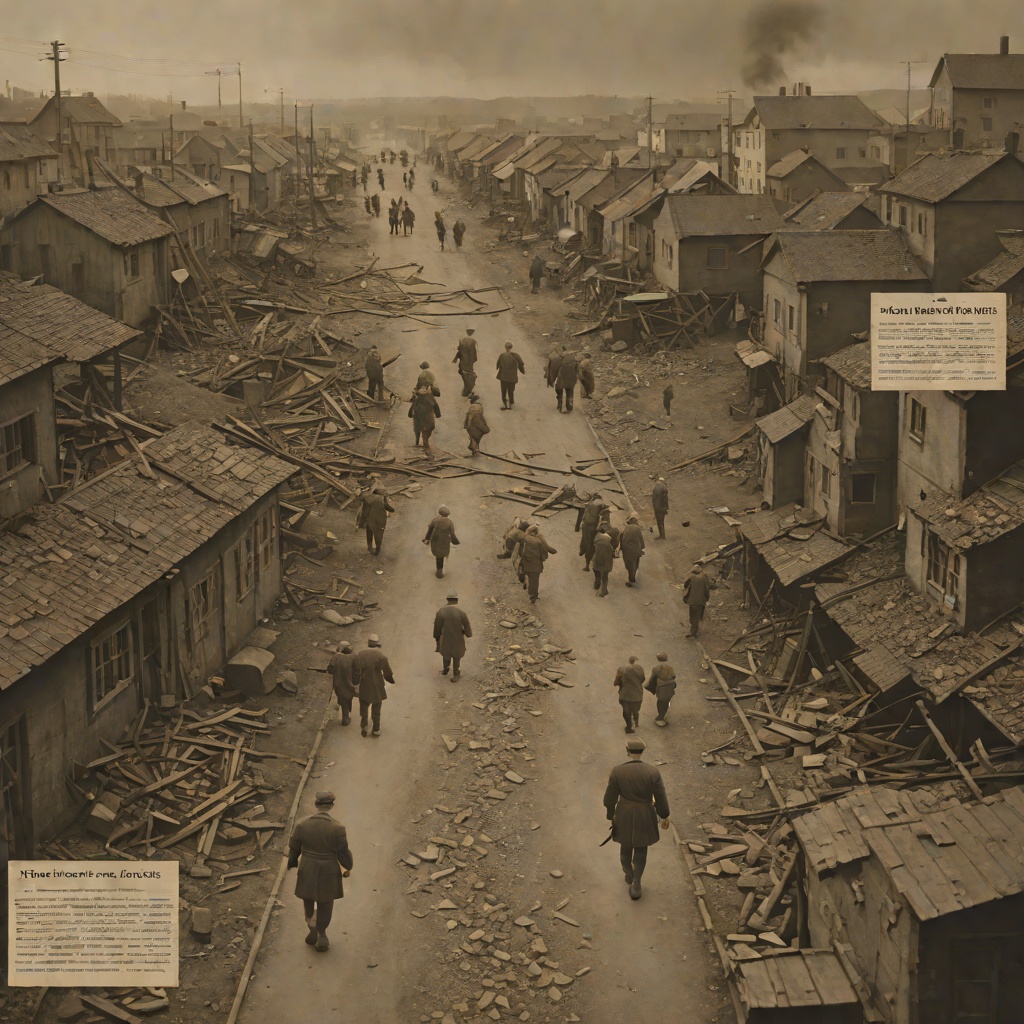
Late one night, Lale was woken by yelling SS, barking dogs, and screaming women and children. He opened his door and looked out to see the men, women, and children in his block being forced from the building. He watched until the last woman, clutching an infant, was shoved brutally out into the night. He followed them all outside and stood, stunned, as all around him the other Romany blocks were also emptied. Thousands of people were being herded onto nearby trucks. The compound was lit up, and dozens of SS and their dogs corralled the mob, shooting at anyone who did not respond immediately to the instruction, "Get on the truck!" When Lale stopped a passing officer he recognized and asked where they were being taken, the man responded, "You want to join them, Tätowierer?" and walked on. The threat was clear: any protest would mean joining the doomed.
Lale sank into the shadows, scanning the crowd. He saw Nadya, a Romany woman he had befriended, and ran to her, pleading, "Nadya, don't go." She forced a brave smile and replied, "I don't have a choice, Lale. I go where my people go. Goodbye, my friend, it's been . . ." An officer pushed her along before she could finish. Lale stood paralyzed, watching until the last person had been loaded onto the trucks. The trucks drove off, and slowly he walked back into the eerily silent block. He went back to bed, but sleep would not come. The silence of the emptied block was a new kind of horror, a void where a vibrant community had been.
Aftermath and the Weight of Ash
The next day, the scale of the atrocity became undeniable. Lale raised his head but moved his gaze to the doctor's forehead, refusing to look into his eyes, muttering, "Yes, Herr Doktor. I'm sorry, it won't happen again, Herr Doktor." Mengele barked at him to get back to work, and Lale looked at Leon and pointed to the ash now falling all around them. "They emptied the Gypsy camp last night," he said. Leon handed Lale his tattoo stick before going back to work himself, in silence. Lale looked up, searching for the sun to shine down on him, but it was concealed by ash and smoke. The physical evidence of the genocide—the ash falling from the sky—was now a constant, inescapable presence. That evening he returned to his block, which was now occupied by people that he and Leon had marked earlier. He shut himself away in his room. He did not want to make friends. Not tonight. Not ever. He wanted only silence in his block. The genocide had not only taken lives; it had destroyed Lale's capacity for connection, at least for a time.
Grief, Memory, and the Vow to Survive
In the wake of the liquidation, Lale's grief found expression in the rituals of his own tradition. He helped the men gather the small bodies into a pile for the SS to take away, watching as several mothers refused to hand over their precious children, and it was heartbreaking to see small, lifeless forms being wrenched from their mothers' arms. He recited the kaddish in a whisper, "Yisgadal v'yiskadash sh'mei raba—may his name be magnified and made holy . . ." He did not know how or with what words the Romany honor their dead, but he felt an instinct to respond to these deaths in the way he had always known. He sat outside for a long time, looking skyward, wondering what the Americans had seen and thought. Several of the men joined him in silence, a silence that was no longer quiet. A wall of grief surrounded them.
Lale thought about the date, April 4, 1944. When he had seen it on his work sheets that week, "April" had jarred with him. Then he realized that in three weeks' time, he would have been there for two years. He thought back to the vow he had made at the beginning: to survive and to see those responsible pay. Maybe, just maybe, those in the plane had understood what was going on, and rescue was on the way. It would be too late for those who died today, but maybe their deaths would not be entirely in vain. He held that thought, using it to get out of bed the next morning, and the next, and the next. The twinkling of stars overhead was no longer a comfort; they merely reminded him of the chasm between what life can be and what it is now. The genocide had transformed even the night sky from a source of solace into a reminder of loss.
The Genocide in Historical and Narrative Context
The liquidation of the Gypsy camp is a specific instance of the broader Romani genocide, a campaign of extermination that paralleled the Holocaust of the Jewish people. The narrative draws a stark parallel between the fates of the two groups: just as Lale was told that his crime was to be Jewish, the Romany were targeted for their ethnicity. The event is also a key moment in Lale's own story, one that he carried with him for decades. The author of the book, who recorded Lale's testimony, noted that Lale's memories were remarkably clear and precise, matching research into people, dates, and places. There was no parting of memory and history for this beautiful old man—they waltzed perfectly in step. The Romani genocide, as witnessed by Lale, is thus not just a historical fact but a lived trauma that shaped his identity, his grief, and his determination to ensure that such horrors would never happen again. His need to tell his story, so that "it would never happen again," was driven by the weight of these memories, including the night he watched his Romany friends be taken away to their deaths.